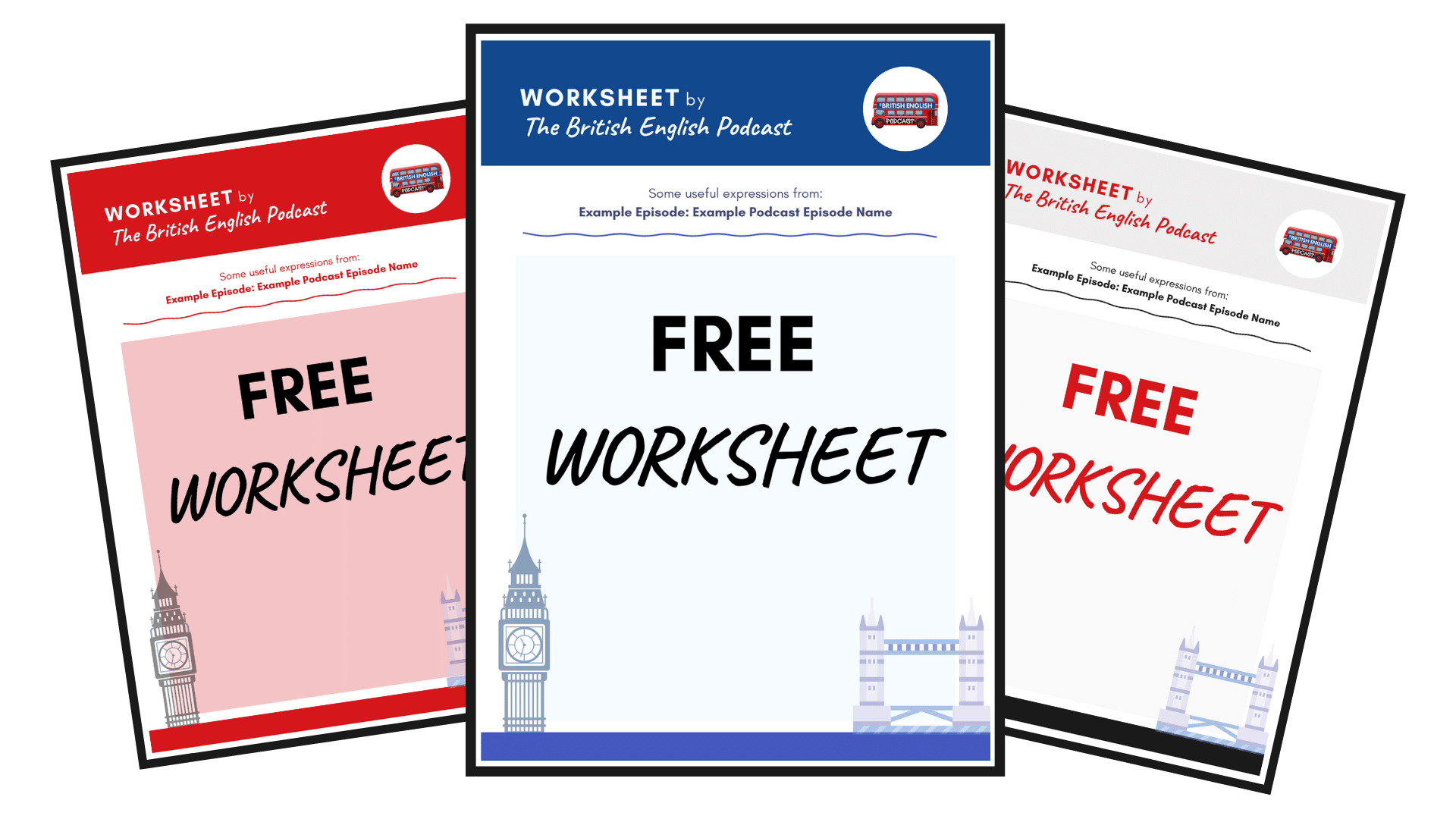
Access your active membership's learning resources for this episode below:
Access your active membership's learning resources for this episode below:
Continue listening to this episode
Improve your British English listening with this funny Room 101 episode featuring Luke Thompson. Learn natural expressions, humour, and cultural references for B1–C2 learners.
A funny British English listening lesson built around everyday complaints
In this bonus episode of The British English Podcast, Charlie is joined by Luke Thompson from Luke’s English Podcast for a playful conversation inspired by the classic British show Room 101. The idea is simple: you choose everyday things that annoy you and argue that they should be banished forever. In this episode, Luke nominates mosquitoes, people who leave protective plastic film on products, and horoscopes and astrology.
This is excellent British English listening practice because the conversation feels natural, humorous and unscripted. Learners hear two native speakers interrupt, joke, react, explain and disagree in a very realistic way. That makes it especially useful for students who want to improve their understanding of natural conversations in British English.
What happens in the episode?
Charlie introduces the episode as a British-style complaint format based on Room 101, where guests talk about their personal pet hates — small things that really annoy them. Luke then shares his choices in a light-hearted, very British way.
The first topic is mosquitoes, which Luke hates not only because they are dangerous globally, but because they ruin his sleep. He describes the familiar frustration of hearing one buzzing near your ear at night and having to get up to hunt it down. Charlie strongly agrees and adds his own funny story about chasing mosquitoes around the bedroom.
The second topic is the strange habit some people have of keeping the protective plastic film on fridges, screens or other products long after buying them. Luke finds this deeply irritating, especially because it makes the item look worse and reduces the pleasure of actually using it. Charlie agrees and even mentions that his sister does exactly this.
The third topic is horoscopes and astrology. Luke jokes that if astrology really could predict the future, it should surely give us more useful information than vague comments about work relationships or whether we should eat a pastry with our coffee. Even so, both speakers admit that horoscopes can still be entertaining, and in the end this item is not banished to Room 101.
Why this episode is useful for B1, B2, C1 and C2 learners
B1 learners
This episode helps B1 learners get used to familiar everyday topics such as sleep, household objects, work, and personal opinions. The humour makes the listening more memorable, and the repeated discussion of one topic at a time supports comprehension.
B2 learners
B2 learners can focus on how Charlie and Luke develop ideas, react naturally, and use informal spoken English. This is very useful for improving listening fluency and learning how real conversations flow.
C1 learners
C1 learners will benefit from the irony, cultural references, and layered humour. Luke’s comments about astrology, media habits and modern life are especially rich in tone and attitude.
C2 learners
C2 learners can enjoy the subtleties of the humour, including sarcasm, understatement, playful exaggeration and quick conversational shifts. This is the kind of material that helps advanced learners sound more natural and culturally aware.
British cultural references in this episode
This episode is also strong for cultural awareness, which is a big part of understanding British English well.
The whole format is based on Room 101, a well-known British comedy panel show where guests argue for banishing things they dislike. Luke also mentions that the idea originally comes from George Orwell’s 1984, where Room 101 is a place connected to fear and punishment. The speakers also refer to British comedians and comedy characters such as Frank Skinner and Alan Partridge, which gives learners a nice glimpse into British humour and media culture.
Another useful cultural detail is the style of humour itself. Much of the conversation is built on exaggeration, mock seriousness and complaining about small everyday irritations. That style is very recognisably British and can help learners understand how humour often works in the UK.
Best listening points to focus on
When listening to this episode, try to notice:
how the speakers interrupt each other naturally
how they show agreement without always saying “I agree”
how humour changes the tone of the conversation
how idioms are used in context
how British cultural references appear naturally in conversation
This makes the episode a strong choice for learners looking for British English listening practice through natural conversations rather than heavily simplified material.
Final thoughts
This is a lively, funny episode that gives learners much more than vocabulary. It offers exposure to real British interaction, everyday opinions, cultural references and conversational humour. For learners from B1 to C2, it is a useful piece of listening practice that feels entertaining rather than academic. If you want to improve your understanding of spoken British English while enjoying a culture-based conversation, this episode is a very good place to start.
What do I get when I join?
Want to Learn Native Vocab FAST?
Ready to massively improve your speaking skills?
Learn Native Vocab FAST.
Ready to massively improve your speaking skills?
What's included?
What's included?
What's included?
What's included?
What's included?
What's included?
What's included?
- 10 Native Expressions Per Episode: Get some of the top expressions used in each episode, curated by a native British English teacher.
- Clear Definitions: Understand each expression with precise definitions made for non-native learners.
- Seamless Learning: Listen to the episode and see the vocabulary & definitions on the same page, making your learning process smooth and efficient.
What's included?
What's included?
What's included?
- 10 Native Expressions Per Episode: Get some of the top expressions used in each episode, curated by a native British English teacher.
- Clear Definitions: Understand each expression with precise definitions made for non-native learners.
- Seamless Learning: Listen to the episode and see the vocabulary & definitions on the same page, making your learning process smooth and efficient.
Why You Need The Worksheets
Enhance Your
Listening Experience:
Improve
Retention:
learned to ensure it sticks.
Boost
Confidence:
confidence in real-life situations.